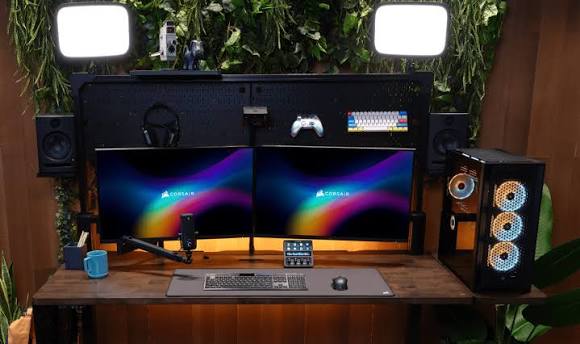
For most of computing history, the desktop tower lived under the desk, a beige or black box whose only job was to be ignored. That era is over. Walk through any gaming setup thread, stream background, or dorm room tour today and the PC itself has moved onto the desk, lit up, visible from every angle, and styled as deliberately as the room around it. The machine became the centerpiece, and that shift has quietly rewritten what people look for when buying components.
From Spec Sheet to Showpiece
The old way of shopping for PC hardware was a numbers game: clock speeds, framerates, thermals, price. Those still matter, but a second question now carries nearly equal weight: what will this look like sitting on my desk?
The market has responded in visible ways. Panoramic glass cases with wraparound views replaced windowless steel boxes, giving builders a fishbowl display for their components. Cases now ship with touchscreen displays built into the frame, showing system stats, artwork, or animations. Even the humble riser cable, once a hidden utility part, has been redesigned so builders can mount their graphics card vertically, face-out, like the trophy it cost as much as.
Fans and cooling tell the same story. Case fans used to be judged purely on airflow and noise. Today’s versions come with individually addressable RGB lighting, daisy-chain connections that hide cabling, and even coolers with small digital screens that display temperatures or custom animations. The component didn’t stop being functional; it just stopped being invisible.
Why This Isn’t Just Vanity
It’s easy to dismiss the aesthetic turn as style over substance, but there are practical currents underneath it.
Visible builds create accountable builds. When every component is on display behind glass, cable management, dust control, and airflow planning stop being optional. Showcase builders tend to maintain their machines better, because neglect is literally visible.
Personalization drives learning. The desire to build something distinctive pulls newcomers into understanding their hardware. Someone who starts by wanting a case that matches their setup ends up learning about fan curves, airflow direction, and thermal paste along the way. Aesthetics has become the on-ramp to genuine technical literacy.
The desk is now a broadcast studio. For streamers and content creators, the PC appears on camera daily. Hardware that looks professional is, in a real sense, part of their production equipment.
Building a Showcase Without Sacrificing Performance
The good news is that the trade-off between form and function has mostly dissolved, but a few principles keep a beautiful build a smart one. Prioritize airflow over pure looks when choosing where fans go; a stunning PC that thermal-throttles is a sculpture, not a computer. Check clearances before buying a panoramic case, since wraparound glass sometimes changes radiator and GPU fitment. Buy lighting and fans from one ecosystem where possible, because a single control software beats juggling three apps that fight each other. And leave room in the budget for the finishing details, like cable extensions and light strips, which often do more for the final look than another hundred dollars of raw horsepower.
The Bigger Picture
Gaming hardware has joined the category of things people curate rather than merely own, alongside sneakers, keyboards, and vinyl shelves. Whether that’s culture or consumerism is a debate for another day. What’s certain is that the ugly beige box isn’t coming back, and for anyone building a PC in 2026, the machine’s personality is now part of the parts list.
Leave a Reply