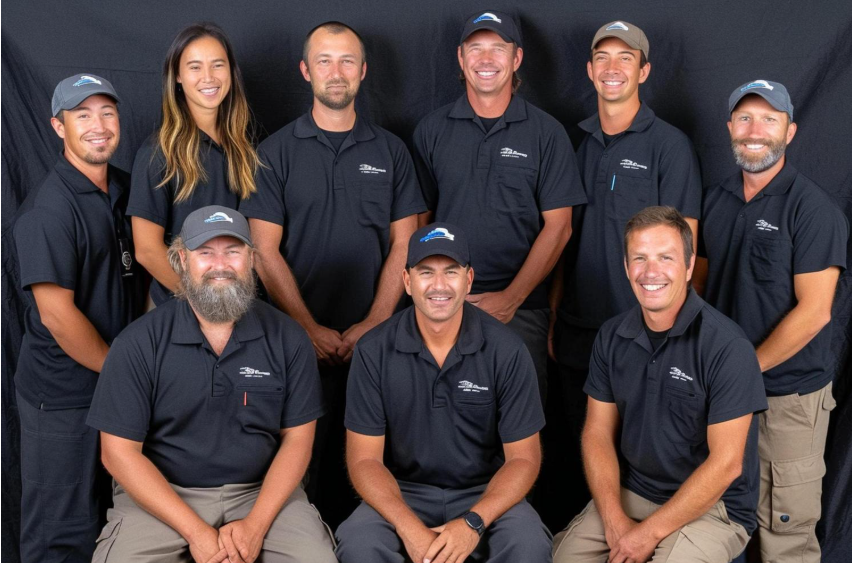
Event marketing involves a lot of decisions about where to allocate budget, and most of those decisions get evaluated against a metric of impressions, leads, or conversions. Custom branded workwear tends to get evaluated against none of those metrics, because it is typically purchased as an operational necessity rather than as a marketing investment. That framing is a mistake, and the businesses that have corrected it tend to get significantly more value from their event presence.
What Staff Appearance Does for Brand Perception
The moment a potential customer approaches an event stand or booth, the staff they interact with is the brand. Not the product, not the signage, not the promotional material: the person in front of them. How that person is dressed, whether they look like they belong to a professional organisation that takes its presentation seriously or like they grabbed something from the back of a wardrobe that morning, sets the tone for the entire interaction.
This is not a trivial effect. Research on first impressions in commercial contexts consistently finds that appearance signals establish the perceived credibility of a brand within seconds of initial contact. An event stand staffed by people in cohesive, professionally printed branded workwear communicates organisational quality before a single word is spoken. The same stand staffed by people in uncoordinated casual clothing communicates the opposite, regardless of the quality of the product being demonstrated.
Custom screen printing for businesses is the mechanism that makes this possible at accessible price points. Screen printing produces durable, vibrant designs on a range of garment types, scales efficiently for team quantities, and creates the visual consistency that makes a group of people look like a coherent unit rather than a collection of individuals. The Work Wear Store offers custom screen printing and embroidery services that serve exactly this need, producing branded workwear for businesses that want their event staff to present professionally without the premium cost associated with fully bespoke corporate clothing.
The Walking Advertisement Effect
Event workwear does not stop working when staff are standing at the designated stand. Every time a team member walks through the event venue, moves between sessions, queues for lunch, or navigates the wider event space, they are wearing the brand. At a large trade show or conference, this ambient exposure across the full event environment is additional impressions that do not appear in any paid media budget but accumulate throughout the day.
For businesses that invest in events as a primary lead generation or brand awareness channel, this ambient exposure is a meaningful secondary benefit of workwear investment. The cost of producing quality branded workwear for a team of ten people is typically a small fraction of the total event spend, but the contribution to brand visibility across the event lasts the full duration.
Consider also the post-event life of quality branded garments. Staff who receive workwear they actually want to wear outside of work settings extend the brand’s reach into everyday contexts. A well-designed, comfortable screen-printed garment has a lifespan measured in years, not days, and each wearing is an organic brand impression in contexts that no paid advertising budget reaches.
Making Screen Printing Work for Your Brand
The quality of the outcome depends on the quality of the brief. Screen printing translates artwork into physical print through a process that involves creating a separate screen for each colour in the design. This means that designs with many colours cost more to produce and require more care in the artwork preparation stage. The most effective branded workwear designs for screen printing are those that work in a limited colour palette, use bold shapes and legible typography, and are adapted for the specific garment placement rather than simply scaling down a logo that was designed for digital use.
Working with a supplier who can advise on design optimisation for the print process, rather than simply accepting any file and producing whatever comes out, produces meaningfully better results. The goal is not just to have the logo on the garment: it is to have a design that looks intentional, holds up after washing, and represents the brand at the quality level you want the event audience to associate with it.
This attention to detail aligns with broader branding principles recognised throughout the marketing industry. According to Forbes, consistent brand presentation across physical and digital touchpoints plays an important role in shaping customer perception and improving brand recognition. Branded apparel often becomes one of the most visible representations of a company during events, trade shows, community activities, and customer interactions, making print quality and design execution far more important than many organisations initially realise.
When screen printing is approached strategically, it becomes more than a method of applying a logo to fabric. It becomes a practical branding tool that reinforces professionalism, increases visibility, and helps create a lasting impression long after the event itself has ended.
Timing and Planning
The most common mistake in event workwear is leaving the order too late. Screen printing requires a setup process for each design, and quality suppliers manage demand across multiple clients. Orders placed close to the event date face either rushed production, which affects quality, or a missed deadline, which means showing up at the event without the workwear that was supposed to be the plan.
Building the workwear order into the initial event planning timeline, alongside the stand booking, travel arrangements, and marketing materials, avoids this entirely. For events with a fixed date, working backward from that date with a clear production window in mind gives the supplier enough time to do the job properly and gives the buyer enough time to review proofs before committing to the full print run.
Custom branded workwear is one of the few event investments that keeps working after the event ends. Getting it right is worth the planning effort.
Leave a Reply