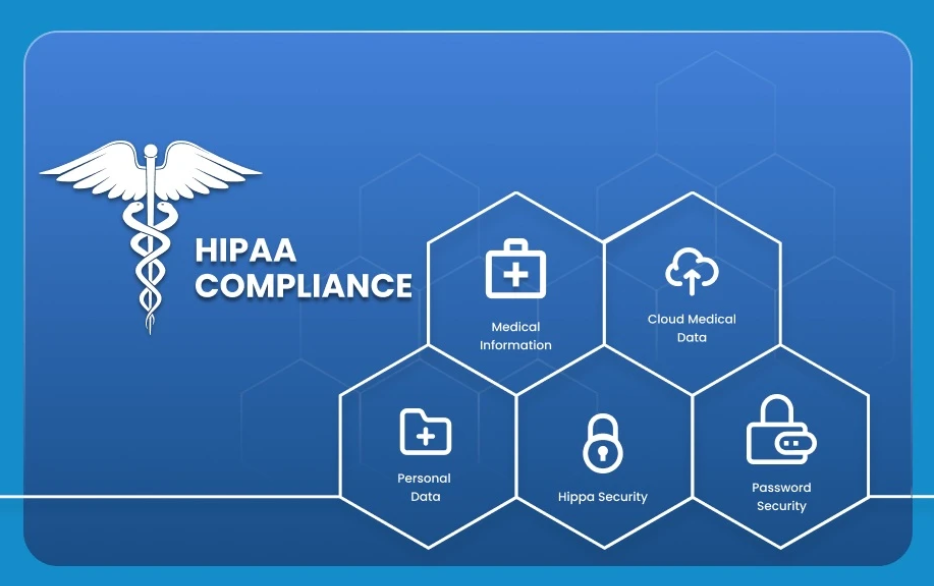
Building a healthcare app requires more than a useful product idea and a reliable development team. For startups handling sensitive health information in the United States, understanding the Health Insurance Portability and Accountability Act (HIPAA) is an important early step. Before investing in development, founders should assess whether HIPAA applies to their product, define security requirements, and plan for the responsibilities that continue after launch.
1. Determine whether HIPAA applies to your app
Not every health-related app falls under HIPAA. The law primarily applies to covered entities, such as qualifying healthcare providers, health plans, and healthcare clearinghouses, as well as their business associates under certain conditions.
For example, a software company developing a patient management platform for a healthcare provider may act as a business associate if it handles protected health information (PHI) on the provider’s behalf. By contrast, a consumer wellness app collecting health data directly from individuals does not automatically fall under HIPAA.
Startups should examine their business model, users, data flows, and contractual relationships before deciding which requirements apply. Other privacy laws may still be relevant even when HIPAA does not apply. The U.S. Department of Health and Human Services (HHS) provides resources to help app developers assess their obligations.
2. Define security requirements before development
Security decisions made early can be difficult and expensive to change after an app has launched. Startups should identify what information they collect, where it is stored, who can access it, and how it moves between systems.
2.1. Protect sensitive health information
Applications handling electronic protected health information (ePHI) need appropriate safeguards based on their risks. These may include encryption, secure authentication, role-based access controls, and audit logs that record relevant activities.
However, implementing these features alone does not establish HIPAA compliance. Covered entities and business associates must address applicable administrative, physical, and technical safeguards, including risk analysis and risk management.
2.2. Plan for security throughout the product lifecycle
Security should be part of design, development, testing, deployment, and maintenance. Startups should establish procedures for reviewing vulnerabilities, managing access permissions, applying updates, and responding to security incidents.
A minimum viable product (MVP) can have a limited feature set, but it should not postpone safeguards that are necessary for the information it handles. Building security into the initial architecture is often more practical than redesigning the system later.
3. Evaluate cloud providers and development partners
Many healthcare startups rely on cloud infrastructure and external software development teams. These relationships can affect both technical security and legal responsibilities, so founders should assess them before choosing a provider.
If a cloud service provider creates, receives, maintains, or transmits ePHI on behalf of a covered entity or business associate, it may qualify as a business associate under HIPAA. A business associate agreement (BAA) is generally required in such circumstances. Startups should confirm which services support the necessary arrangements rather than assuming that every product offered by a cloud vendor is suitable.
When selecting a development partner, ask how the team approaches access control, secure coding, testing, documentation, and incident response. It is also important to clarify who owns security decisions and who will maintain the system after launch.
A development partner can help implement technical safeguards, but that work does not automatically transfer all compliance responsibilities away from the startup or healthcare organization.
4. Balance MVP priorities with compliance needs
Startups often operate under tight budgets and need to validate their product before making large investments. The challenge is deciding which features can wait without creating unacceptable security or compliance risks.
A practical approach is to separate core product functionality from safeguards required for the intended use of the application. Features such as advanced analytics or automated recommendations may be introduced later, while appropriate access controls, data protection, and audit capabilities may be necessary from the beginning.
Founders should also account for less visible costs, including security assessments, testing, infrastructure configuration, documentation, and ongoing maintenance. These expenses vary depending on the product’s complexity, data flows, and regulatory obligations.
A realistic development plan should therefore consider both the initial release and the resources needed to operate the application securely over time.
5. Prepare for ongoing compliance and maintenance
Launching an app is not the end of the process. New integrations, additional users, changing workflows, and software updates can introduce risks that were not present during initial development.
Startups should establish a maintenance plan covering vulnerability management, access reviews, backups, incident response, and periodic risk assessments. They should also define how data will be retained, returned, or securely destroyed when contracts end, where applicable.
Documentation matters as well. Keeping records of security decisions, testing, responsibilities, and relevant agreements helps teams manage changes and demonstrate how risks are being addressed. As the business grows, these practices can support more consistent operations and reduce the likelihood of costly rework.
6. Make informed decisions before building
Developing a HIPAA-compliant app starts with understanding the product’s legal context, data flows, and security requirements. Startups that address these questions early can make better architectural decisions, set more realistic budgets, and choose development partners with clearly defined responsibilities.
7. Learning from real-world healthcare app development
Real-world healthcare projects can offer useful lessons for startups planning their own applications. Beyond choosing the right technology, development teams need to understand clinical workflows, protect sensitive information, and build systems that meet the needs of healthcare professionals.
For example, PowerGate Software developed a HIPAA-compliant communication platform for transplant professionals. The project illustrates the role of secure communication tools in a specialized healthcare environment, where reliable information exchange is important to professional workflows.
For startups, the key takeaway is to choose a development partner that can translate healthcare requirements into practical technical decisions. Relevant project experience can help inform architecture and implementation choices, although each new application must be assessed against its own regulatory obligations, data flows, and security risks.
Working with an experienced healthcare software development team can help translate these requirements into practical engineering decisions. Ultimately, compliance is an ongoing responsibility, not a feature that can simply be added before launch.
Leave a Reply