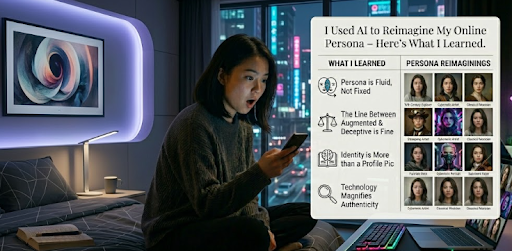
At first, it started as a small experiment. I had a few ordinary photos, the kind most people keep on their phone and never think much about. A selfie from a weekend trip, a profile picture that felt slightly outdated, a casual mirror shot with bad lighting, and a few images I had once posted online without much thought.
I was not trying to become someone else. I was simply curious about how far AI photo editing had come. For years, changing a photo meant adding a filter, adjusting brightness, smoothing skin, or cropping the frame until it looked more presentable. But now, AI can do something much bigger. It can take the idea of you and turn it into different versions: cinematic, futuristic, professional, surreal, playful, elegant, or completely unexpected.
That was the moment I realized I was not just editing photos anymore. I was building a digital version of myself.
The First Edits Felt Harmless
I started with simple changes. Better lighting. A cleaner background. A more polished profile photo. Nothing dramatic. The first results looked like the kind of photos I wished I had taken on a better day, with better lighting and a better camera.
Then I tried a few style-based edits. One image became a magazine-style portrait. Another looked like it belonged on a movie poster. A casual photo turned into something closer to an album cover.
It was fun, but also strange. The photos still looked like me, but they carried a different energy. More confident. More curated. More intentional.
That is when I understood why AI photo tools have become so popular. People are not only using them to “fix” images. They are using them to test versions of themselves they may not show in everyday life.
My Online Persona Started to Feel Like a Character
After a few rounds of editing, I noticed something interesting. I was no longer asking, “Does this photo look good?” I was asking, “What does this version of me say?”
A professional portrait made me look serious and focused. A darker cinematic edit made me look mysterious. A colorful fantasy-style version made me look more creative and expressive. Each image told a slightly different story.
That is the power of AI image editing. It does not simply change how you look. It changes how people might read you.
Online, we already do this all the time. We choose profile pictures, write bios, post certain moments, and hide others. AI just makes that process more visual and more intense. It turns personal branding into something closer to character design.
For creators, influencers, freelancers, gamers, and even casual social media users, that can be useful. A strong image can make a profile feel more memorable. It can help someone express a mood, a niche, or a creative identity more clearly.
But it can also become addictive. Once you see a more polished, more dramatic, more “ideal” version of yourself, normal photos can suddenly feel too plain.
The Weird Part Was Seeing Myself Too Perfectly Edited
The most surprising part was not when AI made a bad image. It was when it made an image that looked too good.
Some edits had perfect skin, perfect lighting, perfect symmetry, and a level of polish that no real photo usually has. At first, I liked them. Then I started to feel disconnected from them.
They looked like me, but they did not feel like me.
That is where AI photo editing becomes complicated. A little enhancement can make a photo better. Too much enhancement can turn a person into a product. The image becomes impressive, but less human.
This is especially true for online personas. When every photo is optimized, stylized, and polished, the result may attract attention, but it can also create pressure. You start comparing your real appearance to a version of yourself created by software.
That does not mean AI editing is bad. It means it should be used with awareness. The best results, at least for me, were not the ones that erased every imperfection. They were the ones that kept something real while adding a creative layer.
AI Made Creativity Feel More Accessible
One thing I genuinely liked was how easy AI made visual creativity feel. In the past, creating a professional-looking image required photography skills, editing software, good equipment, or hiring someone. Now, a person with no design background can experiment with mood, style, composition, and identity in minutes.
That opens the door for a lot of people.
Someone launching a personal brand can test different profile looks. A musician can create visual concepts for a release. A gamer can design avatar-inspired content. A writer can create a moodboard for a fictional character. A small business owner can make their online presence feel sharper without needing a full creative team.
Even more niche platforms such as nakedly ai show how specific and personalized AI image experiences have become. The broader point is not just that AI can edit photos. It is that visual identity is becoming more flexible, more experimental, and more accessible to ordinary users.
That flexibility is exciting. It means people can explore styles that once required a photographer, stylist, designer, or studio setup.
But The Ethics Cannot Be Ignored
The deeper I went into AI photo editing, the more I realized that creativity and responsibility have to sit together.
Editing your own images is one thing. Editing someone else’s image without permission is completely different. That is where AI tools become risky, especially when the result changes a person’s body, identity, clothing, or context in a sensitive way.
Consent matters. Privacy matters. Intention matters.
A tool can be creative in one situation and harmful in another. The difference often comes down to whether the person in the image agreed to it, whether the edit could damage their reputation, and whether the image is being shared publicly.
This is especially important with more sensitive AI editing categories, including a nudifier, where the line between fantasy, privacy, and misuse has to be taken seriously. These tools should never be treated like harmless toys when real people’s images are involved.
The rule I came away with was simple: if I would not want someone doing it to my photo without asking, I should not do it to anyone else.
My Favorite Results Were Not the Most Extreme Ones
After testing different styles, I expected my favorite images to be the most dramatic. The futuristic versions. The fantasy versions. The ones that looked nothing like ordinary life.
But they were not.
The best images were the ones that still felt believable. A stronger portrait. A better background. A more artistic version of a normal photo. They had enough AI to feel fresh, but not so much that they lost the person underneath.
That taught me something about online identity. People do not always connect with perfection. They connect with personality. A digital persona can be polished, but it still needs some human texture.
If everything looks artificial, people notice. If everything looks too flawless, it can feel cold. The strongest AI-edited images are often the ones where the technology supports the story instead of taking over the whole image.
AI Photo Editing Changed How I Think About Self-Expression
Before this experiment, I thought AI photo editing was mostly about making pictures look better. Now I see it as something bigger.
It is a tool for self-expression. It lets people explore different versions of themselves, test visual identities, and create images that match how they want to be seen. For some, that may be professional. For others, it may be artistic, playful, anonymous, glamorous, or completely fictional.
But it also raises real questions. How much editing is too much? When does creativity become deception? How do we protect people from misuse? And how do we keep our real selves from feeling less valuable than the AI-enhanced versions?
I do not think the answer is to avoid AI photo tools completely. They are already part of modern digital culture, and they will only become more common. The better answer is to use them intentionally.
Use them to create, not to mislead.
Use them to express yourself, not to erase yourself.
Use them on your own images, not someone else’s private identity.
Use them as a tool, not as a replacement for confidence.
Final Thoughts
Reimagining my online persona with AI was more interesting than I expected. It was fun, creative, and sometimes genuinely impressive. But it also made me more aware of how easily digital identity can be shaped, polished, exaggerated, or distorted.
The biggest lesson was this: AI can create a new version of your image, but you still have to decide what that version represents.
A good online persona is not just about looking better. It is about telling a clearer story. AI can help with that, but only when the person using it stays in control.
Leave a Reply