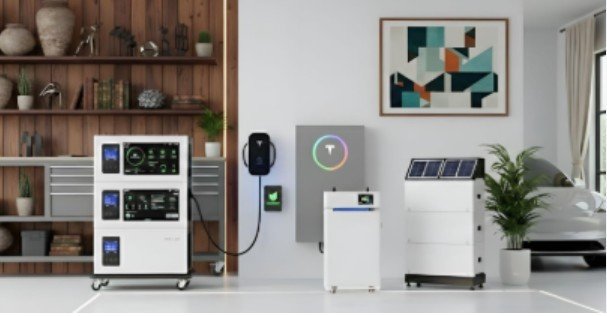
Power cuts, rising electricity rates, and unpredictable weather have made one thing clear: relying entirely on the grid is no longer the safest bet for a household. That’s why more families are turning to a Home Energy Storage System a battery setup that stores electricity for use whenever it’s needed, whether that’s during a blackout, a peak-rate evening, or simply to make the most of rooftop solar panels.
What Exactly Is a Home Energy Storage System?
At its core, a home energy storage system is a battery installed in your garage, utility room, or on an exterior wall that captures electricity either from solar panels or the grid during cheaper hours — and stores it for later use. Capacities usually range from around 2.5 kWh for small backup needs up to 30 kWh for whole-home coverage.
Most modern units run on lithium iron phosphate (LiFePO4) battery cells, chosen for their safety, long lifespan, and stable performance across thousands of charge cycles. A built-in battery management system keeps an eye on temperature, voltage, and charge levels automatically, so homeowners don’t need to think about maintenance day to day.
Everyday Benefits for Homeowners
Keeping the Lights On During Outages
One of the most appreciated benefits is automatic backup power. When the grid goes down, a home energy storage system can switch over in milliseconds, keeping the refrigerator running, phones charged, and essential appliances powered without anyone lifting a finger.
Getting More Out of Solar Panels
Solar panels only generate electricity while the sun is out, which means a lot of that power goes unused if there’s no way to store it. A home battery captures the extra daytime generation and holds it for evening use, dramatically increasing how much of your own solar power you actually consume rather than sending it back to the grid for a fraction of its value.
Lowering Electricity Bills
Many utility providers charge more for electricity during peak evening hours. A home energy storage system lets you charge during cheaper off-peak periods or from solar, then draw on stored power instead of paying peak rates — a strategy that adds up to meaningful savings over a year.
Reducing Noise and Hassle Compared to Generators
Unlike a gas or diesel generator, a battery system runs silently, needs no fuel, and doesn’t require regular servicing — a real advantage for families who want reliable backup without the upkeep.
What to Look for When Choosing a System
Capacity that matches your needs. A small apartment might only need a couple of kWh to cover essentials, while a larger home may want 15–30 kWh for extended backup or higher solar offset.
Safety certifications. Look for UN38.3, IEC 62619, or CE certification, along with built-in overheating and short-circuit protection.
Smart monitoring. A good system should let you check charge levels, usage patterns, and alerts from a phone app, rather than requiring a trip to the utility room.
Expandability. Some households start with a single battery and later add more units as energy needs grow — a feature worth checking before you buy.
How Home Systems Compare to Larger Installations
It’s worth understanding where home battery technology fits into the bigger picture. A Commercial Energy Storage System works on the same principles but is built for much larger scale — powering entire factories, offices, or retail buildings rather than a single household. These systems handle far heavier loads, often reaching hundreds of kilowatt-hours or more, and include industrial cooling and fire-safety features suited to continuous, high-demand operation.
For homeowners who also run a small business from the same property, or landlords managing multiple units, it can help to understand both categories so the right size and type of battery gets installed in the right place.
Making the Decision
Choosing a home energy storage system usually comes down to three questions: how much backup power do you actually need, do you already have (or plan to install) solar panels, and what’s your budget for both the battery and installation. Looking at a recent electricity bill to see your typical evening usage is often the easiest way to estimate the right capacity.
Final Thoughts
A home energy storage system is no longer a luxury reserved for off-grid enthusiasts — it’s becoming a practical, everyday tool for saving money, staying prepared for outages, and getting real value from solar investment. And as this same battery technology scales up into commercial energy storage systems for businesses, it’s clear that stored energy, at any size, is quickly becoming part of how we all manage power in a smarter, more resilient way.
Leave a Reply