
Music has an almost magical power—it can make us laugh, cry, or even feel as if we’re floating through the clouds. And when it comes to music that transcends time, classical music holds a special place in our hearts. But have you ever wondered who crafted the melodies that still move us centuries later? Today, we’ll explore the fascinating lives, works, and enduring legacy of some of the greatest classical music composers of all time.
The Birth of Classical Music
Classical music isn’t just old music—it’s a rich tapestry of culture, history, and creativity. It began around the 17th century and evolved over time, influenced by social changes, technology, and individual genius. Think of classical music as a river: it starts as a tiny stream in the Baroque era, swells with the Romantic period, and continues to flow into modern interpretations.
The magic of classical music lies in its ability to blend emotion and structure. Composers created symphonies, concertos, and sonatas that not only entertained but also told stories without words. And at the heart of this musical journey were the composers themselves—visionaries who turned notes on a page into timeless masterpieces.
Baroque Era: The Age of Ornamentation
The Baroque period (1600–1750) was all about grandeur and drama. Composers experimented with harmony, contrast, and ornamentation to create music that stirred the soul.
Johann Sebastian Bach: The Master of Complexity
Johann Sebastian Bach’s music is like a perfectly designed cathedral—every note has a purpose. Known for works like The Well-Tempered Clavier and Brandenburg Concertos, Bach’s compositions are celebrated for their technical brilliance and emotional depth. Even centuries later, musicians marvel at the intricate patterns and harmonies he created.
Bach’s genius was in combining intellectual precision with emotional resonance. It’s as if he could speak directly to both your mind and heart at the same time.
George Frideric Handel: The King of Oratorios
If Bach was a musical architect, Handel was a storyteller. His operas and oratorios, like Messiah, are filled with drama and grandeur. Handel had a knack for creating melodies that were both majestic and instantly memorable. Walking through his music feels like entering a grand palace where every note tells a story.
The Classical Era: Balance and Clarity
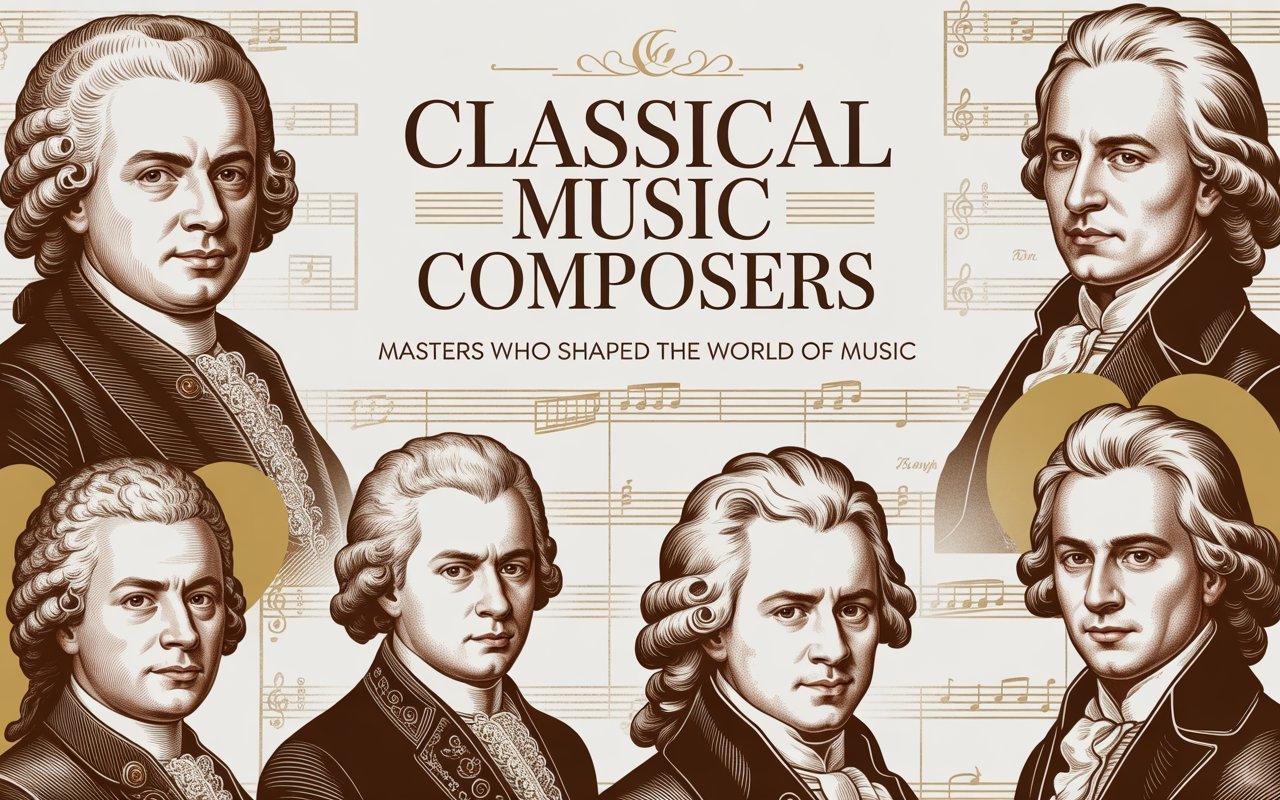
The Classical period (1750–1820) emphasized clarity, balance, and elegance. Composers during this time focused on structure, often using symphonies and sonatas to explore musical ideas with sophistication.
Wolfgang Amadeus Mozart: The Child Prodigy
Mozart is perhaps the most famous name in classical music. From a young age, he amazed audiences with his extraordinary talent. His operas, symphonies, and concertos are full of life, wit, and emotion. Pieces like The Magic Flute and Eine kleine Nachtmusik demonstrate his ability to combine technical skill with an unforgettable musical charm.
Mozart’s music feels like sunlight breaking through clouds—joyful, bright, and instantly uplifting.
Joseph Haydn: The Father of the Symphony
Haydn may not be as widely known as Mozart, but his contributions are monumental. He helped shape the symphony and string quartet into forms that became central to Western music. Haydn’s music often carries a playful spirit, filled with surprises and clever twists. Think of his compositions as musical conversations—sometimes serious, sometimes humorous, always engaging.
The Romantic Era: Emotion Unleashed
The Romantic period (1820–1910) brought music closer to the heart. Composers focused on personal expression, creating works filled with passion, drama, and sometimes melancholy.
Ludwig van Beethoven: Breaking Boundaries
Beethoven was a revolutionary figure. His music evolved from Classical structures into deeply emotional masterpieces. Symphonies like the Ninth Symphony with its iconic “Ode to Joy” and piano sonatas such as the Moonlight Sonata continue to inspire millions. Beethoven’s compositions often reflect his struggles and triumphs, proving that music can capture the human spirit like no other art form.
Frédéric Chopin: The Poet of the Piano
Chopin’s music is delicate, lyrical, and deeply expressive. His nocturnes and études convey a wide spectrum of emotions, often drawing listeners into intimate worlds of reflection and longing. Chopin didn’t just compose music—he painted landscapes of emotion through his piano keys.
Pyotr Ilyich Tchaikovsky: Drama in Every Note
Tchaikovsky’s compositions are full of lush melodies and dramatic intensity. Works like Swan Lake, The Nutcracker, and 1812 Overture are instantly recognizable. His music often tells stories of love, struggle, and triumph, making audiences feel as if they are part of the narrative.
The Impressionist Era: Painting with Sound
In the late 19th and early 20th centuries, composers like Claude Debussy and Maurice Ravel pioneered a style called Impressionism. They focused on color, texture, and atmosphere rather than traditional forms.
Debussy’s Clair de Lune is a perfect example—soft, flowing, and dreamlike. Listening to his music is like watching a sunset on a calm sea, where every ripple shimmers with subtle beauty. Ravel’s Boléro, with its hypnotic rhythm and gradual crescendo, shows how repetition and orchestration can create a powerful emotional effect.
Modern Composers: Breaking the Rules
The 20th century brought experimentation. Composers like Igor Stravinsky and Philip Glass challenged traditional rules, exploring new rhythms, harmonies, and structures.
Stravinsky’s The Rite of Spring caused riots at its premiere, shocking audiences with its revolutionary approach. Meanwhile, minimalist composers like Glass use repetition to create a trance-like effect, proving that classical music is not stuck in the past—it continues to evolve.
Women in Classical Music: Unsung Heroes
Historically, women composers didn’t always receive the recognition they deserved. Yet, figures like Clara Schumann, Fanny Mendelssohn, and Amy Beach made significant contributions. Clara Schumann, for instance, was a brilliant pianist and composer whose works are emotionally rich and technically impressive. Highlighting their contributions reminds us that classical music is a universal language, inclusive of all voices.
The Influence of Classical Music Today
Classical music isn’t just museum music—it’s alive in our modern world. Movies, video games, and even pop songs borrow themes and techniques from classical composers. For example, the suspenseful motifs in modern thrillers often echo Beethoven or Tchaikovsky, demonstrating the timeless influence of these musical giants.
Moreover, classical music has therapeutic benefits. Studies show it can reduce stress, improve concentration, and even enhance memory. So next time you hear a Beethoven symphony or a Chopin nocturne, remember—you’re connecting with centuries of human creativity.
Why Study Classical Composers?
You might wonder, why dive into the lives of composers from hundreds of years ago? The answer is simple: understanding their work deepens our appreciation of music. It reveals the stories behind the notes, the struggles behind the masterpieces, and the human emotions that remain universal.
Think of studying classical composers like exploring a historical city. Each street and building tells a story, each turn brings new discoveries, and the deeper you explore, the richer the experience becomes.
Tips for Enjoying Classical Music
Not sure where to start? Here are some easy ways to dive in:
-
Start with the Classics – Beethoven, Mozart, and Bach are accessible entry points.
-
Watch Performances – Seeing musicians play adds a visual dimension to the music.
-
Listen Actively – Focus on instruments, melody, and rhythm. Imagine the story the music tells.
-
Explore Modern Adaptations – Films, soundtracks, and contemporary renditions can make classical music more relatable.
-
Take Notes – Write down how each piece makes you feel; it helps deepen the experience.
Conclusion
Classical music composers were not just musicians—they were storytellers, innovators, and visionaries who captured the essence of human emotion through sound. From the complexity of Bach to the emotion of Chopin, the humor of Haydn to the drama of Tchaikovsky, each composer offers a unique journey into the heart of music. Their work reminds us that while centuries pass, the power of melody, harmony, and rhythm remains timeless.
Listening to classical music is like reading the diary of humanity: full of joy, sorrow, triumph, and reflection. By exploring the lives of these composers, we not only honor their legacy but also enrich our own experience of the world around us.
FAQs
1. Who are the most famous classical music composers?
The most renowned include Johann Sebastian Bach, Wolfgang Amadeus Mozart, Ludwig van Beethoven, Frédéric Chopin, and Pyotr Ilyich Tchaikovsky.
2. What is the difference between Baroque, Classical, and Romantic music?
Baroque music is ornate and dramatic, Classical music is balanced and structured, while Romantic music focuses on emotion and personal expression.
3. Can classical music improve mental health?
Yes, studies suggest it can reduce stress, improve focus, and enhance mood and memory.
4. Are there famous women classical composers?
Yes, notable women include Clara Schumann, Fanny Mendelssohn, and Amy Beach, who created influential works despite historical obstacles.
5. How can a beginner start listening to classical music?
Start with famous works by Beethoven, Mozart, and Bach, attend live performances, and actively listen for melodies, instruments, and emotional cues.
Leave a Reply