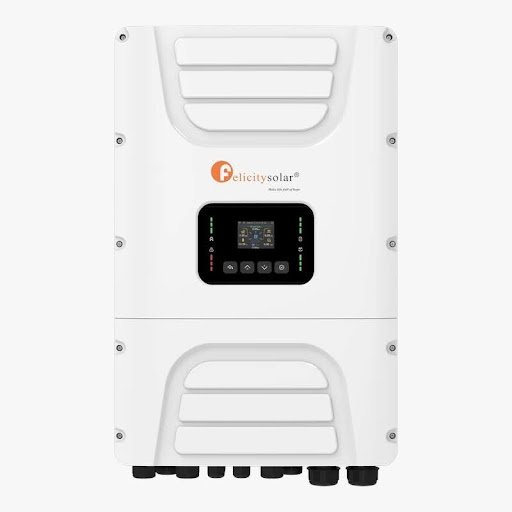
An off-grid solar system can provide electricity in locations where connecting to the utility network is difficult or impractical. However, building a dependable system requires careful selection of each component. Among these components, the off-grid solar inverter has an important role because it converts solar and battery power into electricity that can be used by everyday equipment.
With different inverter capacities, battery technologies, and features available, buyers should understand their requirements before selecting a model.
Start With Your Electricity Needs
The first step in choosing an inverter is understanding how much electricity the system will require.
Make a list of the appliances and equipment that will be powered by the solar system. Include their wattage and estimated operating time. This provides a clearer picture of both peak power requirements and daily energy consumption.
Equipment with electric motors can require additional startup power. Pumps, refrigerators, compressors, and air conditioners are common examples.
The inverter should have sufficient capacity to handle both normal operation and relevant startup demands.
Select the Appropriate Battery System
Battery storage allows an off-grid solar installation to provide electricity when solar generation is low.
The inverter and battery should be compatible in terms of voltage, chemistry, and communication requirements. Lithium iron phosphate and other lithium-based batteries are increasingly used in modern energy storage systems, while lead-acid batteries remain available for certain applications.
Manufacturers normally provide specifications describing supported battery types and voltage ranges.
Consider Solar Input Capacity
The inverter should also match the planned solar array. Its solar input specifications determine how much photovoltaic power it can safely and effectively handle.
Important specifications may include maximum PV voltage, maximum input current, and recommended solar array capacity.
A properly matched solar array and inverter can help the system make effective use of available sunlight while staying within equipment limits.
Look at Efficiency
Efficiency indicates how much of the available electrical energy is successfully converted into usable output power.
Although small efficiency differences may appear insignificant, they can become more important over the lifetime of a solar system. Energy losses can also affect battery runtime and overall system performance.
When comparing products, review the manufacturer’s efficiency specifications and consider how the inverter performs under different loads.
Consider the Installation Environment
Where the inverter will be installed can influence which model is appropriate.
An inverter installed indoors may experience relatively stable temperatures, while equipment installed in an outdoor enclosure may face heat, dust, moisture, or other environmental conditions.
Check the manufacturer’s operating temperature range and enclosure requirements before installation.
Adequate ventilation is also important because power conversion generates heat. Installation instructions should always be followed to ensure safe operation.
Monitoring and Control
Monitoring capabilities can make an off-grid solar system easier to manage. Depending on the inverter, users may be able to monitor solar production, battery voltage, energy consumption, and system alerts.
Some models provide wireless or network-based monitoring. These functions can help owners understand energy usage and identify potential problems.
For remote installations, monitoring can reduce the need for frequent physical inspections.
Protection Features
An inverter should include appropriate safety and protection functions. These may include overload protection, short-circuit protection, over-temperature protection, and low-battery protection.
Protection features can help reduce the risk of damage caused by abnormal operating conditions.
However, users should not rely solely on the inverter’s built-in protections. Proper system design should include suitable electrical protection, grounding, wiring, and installation procedures.
Consider Future Expansion
Energy requirements can change over time. A homeowner may add new appliances, while a farm or business may expand its operations.
When choosing an inverter, consider whether the system may need additional solar panels or battery capacity in the future.
Some inverter systems can be configured as part of larger installations. Understanding these expansion options before purchasing can prevent unnecessary equipment replacement later.
Warranty and Support
A solar inverter is a long-term investment, so warranty coverage and technical support are worth considering.
Buyers should review the warranty period, covered components, service process, and availability of replacement parts.
Clear documentation can also make installation and troubleshooting easier. A manufacturer that provides detailed manuals and technical specifications can help installers configure the equipment correctly.
Comparing Different Models
Instead of comparing products only by price, buyers should create a list of requirements and compare each inverter against them.
Important factors include:
-
Rated output power
-
Peak or surge capacity
-
Battery voltage and compatibility
-
Solar input specifications
-
Conversion efficiency
-
Protection functions
-
Monitoring options
-
Operating temperature
-
Warranty
-
Technical support
-
Expansion capabilities
This approach makes the purchasing process more structured and helps ensure that the selected inverter matches the intended application.
Conclusion
Choosing the right off-grid solar inverter is an important part of designing an independent solar power system. The inverter must work effectively with the solar panels, batteries, and electrical loads while operating safely in its installation environment.
By evaluating power requirements, battery compatibility, solar input, efficiency, monitoring features, protection functions, warranty coverage, and future expansion options, users can select equipment that suits their specific needs.
A properly designed off-grid system can provide dependable electricity for remote homes, farms, businesses, workshops, and other locations while making practical use of solar energy and battery storage.
Leave a Reply