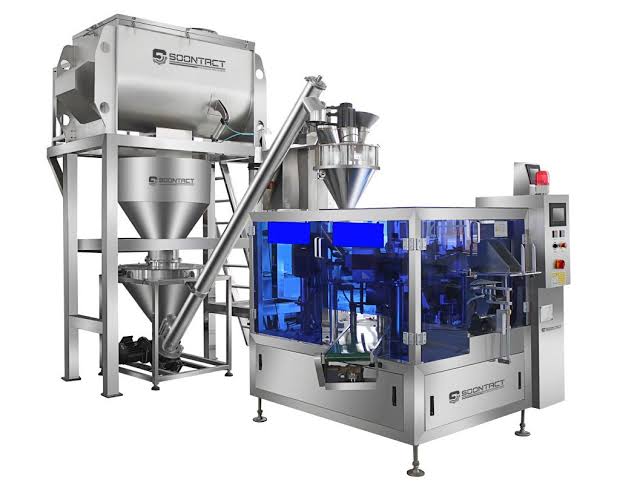
There’s a point every growing powder business hits — usually somewhere around the third or fourth staff member scooping product by hand — where manual filling quietly turns from “good enough” into the biggest bottleneck in the operation. That turning point is why so many businesses eventually invest in an automatic powder filling machine, and why the decision usually pays for itself faster than owners expect.
The Hidden Cost of Manual Filling
On paper, hand-filling powder into containers looks cheap: no equipment cost, no learning curve, just labor. In practice, it carries costs that rarely show up until someone actually adds them up.
Inconsistent fill weights. Manual scooping varies from person to person and even hour to hour as fatigue sets in. Overfilling gives away free product; underfilling risks compliance issues and customer complaints.
Labor that scales badly. Doubling output with manual filling usually means doubling headcount, along with all the training, scheduling, and turnover that comes with it.
Slower speed to market. A manual line simply can’t respond to a sudden spike in orders the way an automated one can, which becomes a real limitation once a product starts selling faster than expected.
Quality control headaches. Catching every underfilled or overfilled container by hand is nearly impossible at volume, which means inconsistent product quietly reaches customers more often than most businesses realize.
Doing the Math: Is Automation Actually Worth It?
The decision to switch usually comes down to a fairly straightforward comparison:
- Current labor cost — how many people, how many hours, and what it costs to fill the current volume by hand.
- Current waste from overfilling — even a small average overfill, multiplied across thousands of units, adds up to real money lost every month.
- Machine cost and expected output — how many units per hour an automatic powder filling machine can realistically handle for the specific powder and container size involved.
- Payback period — comparing the machine’s cost against monthly savings in labor and reduced overfill waste.
For many small-to-mid-sized producers, this calculation lands somewhere between a few months and about two years, depending on current volume and how much overfilling is currently happening unnoticed.
A Realistic Before-and-After
Picture a small producer packing a supplement powder by hand, running two staff members filling roughly 800 containers a day between them, with an average overfill of a few grams per unit to “be safe.” Switching to a machine with even modest automation typically brings a few immediate changes: daily output climbs well past what two people could manage, the overfill drops close to the target weight since the machine doesn’t hedge out of caution, and the two staff members who used to scoop powder can be redirected to labeling, quality checks, or order fulfillment instead of standing at a filling station all day.
None of that requires a massive high-speed industrial line — even a compact machine built for smaller operations tends to produce this kind of shift once it replaces manual scooping.
Matching the Machine to the Business, Not the Other Way Around
One of the most common mistakes is buying based on price alone, without matching the machine to the actual product and business stage. A few practical questions help avoid that:
How fine or coarse is the powder? Very fine powders behave differently from coarse or granular ones, and the filling mechanism should be tested against the specific product rather than assumed to work universally.
What’s the real daily volume — today and in twelve months? Buying strictly for current volume can mean outgrowing a machine within a year; buying purely for future scale can mean overspending on capacity that sits idle.
What container types are involved? Bottles, pouches, jars, and bags all interact differently with a filling head, and not every machine handles every format equally well.
Is downstream equipment already in place? A filling machine that can eventually connect to capping or sealing equipment prevents having to re-architect the whole line later.
Beyond the Machine: What Actually Determines Success
Buying an automatic powder filling machine solves the mechanical problem, but a few operational habits determine whether it delivers the results a business expects:
- Running a short trial with the actual product before committing to a full purchase, rather than relying on a generic demo
- Training staff properly on adjustments and cleaning, since even a well-built machine underperforms if operated inconsistently
- Establishing a basic maintenance routine early, rather than waiting for a breakdown to think about upkeep
- Tracking fill accuracy after installation to confirm the real-world savings match what was expected on paper
Final Thoughts
The shift to an automatic powder filling machine isn’t really about chasing the latest equipment — it’s about recognizing when manual filling has quietly become more expensive than it looks. For most growing operations, the combination of tighter fill accuracy, freed-up labor, and the ability to scale output without scaling headcount makes the switch one of the more straightforward return-on-investment decisions in the entire production process.
Leave a Reply