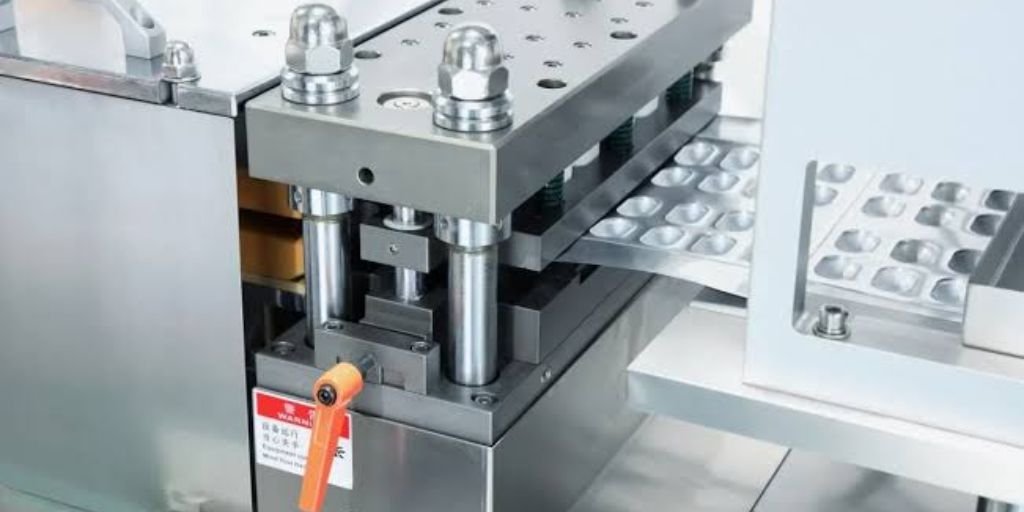
Blister packaging is widely used for products that need to be displayed, protected, and separated into individual units. A blister card packaging machine is designed to place products into formed cavities and seal them with a backing material, often creating a practical package for retail and industrial applications.
This type of packaging can be used for hardware items, consumer products, electronics accessories, medical products, and other small components. Depending on the machine design, the process can include forming, product feeding, sealing, cutting, and final packaging.
What Is a Blister Card Packaging Machine?
A blister card packaging machine is automated or semi-automated equipment used to package products inside transparent plastic cavities attached to a card or backing material.
The plastic cavity holds the product in place while the backing card provides product information and support.
The machine is designed to create a consistent package size and appearance while protecting the product during handling, storage, and transportation.
How Does Blister Card Packaging Work?
The packaging process normally begins with a roll or sheet of plastic packaging material. The material is formed into cavities using heat and forming equipment.
Products are then placed into the cavities manually or automatically, depending on the machine configuration.
The filled blister is positioned against the backing card. Heat sealing or another suitable sealing method can then bond the plastic blister to the card.
After sealing, the package can be cut into individual units using a die-cutting or punching system.
The finished packages can then be inspected and transferred to the next production stage.
Main Components
A blister card packaging machine can contain several important sections.
Material Feeding System
The feeding system transports plastic film and backing cards through the packaging process at controlled speeds.
Forming Unit
The forming unit creates cavities in the plastic material according to the required product dimensions.
Product Feeding System
Products are positioned inside the cavities. Automated systems can use feeders to place products consistently.
Sealing Unit
The sealing section attaches the blister material to the backing card.
Cutting Unit
After sealing, cutting equipment separates individual packages according to the required shape and size.
Benefits of Blister Card Packaging
Blister packaging offers several benefits for manufacturers and retailers.
The transparent plastic cavity allows customers to see the product without opening the package. This can be useful for retail products where product visibility is important.
The package also helps keep individual products organized and can provide protection against handling and minor physical damage.
Other benefits include:
- Clear product visibility
- Consistent package appearance
- Organized product presentation
- Protection during handling
- Space-efficient packaging
- Suitable for many small products
- Easy integration with labeling and printing
Applications
Blister card packaging machines can be used for a wide variety of products.
Hardware manufacturers can use blister cards for screws, hooks, fasteners, fittings, and other small components.
Consumer product manufacturers can package accessories, small tools, stationery products, and household items.
Some medical and healthcare products may also use blister-style packaging, although specialized equipment and packaging standards may apply depending on the product.
The appropriate machine should always be selected according to the product and packaging requirements.
Choosing a Blister Card Packaging Machine
Several factors should be considered before purchasing a machine.
The size and shape of the product are important because the forming cavity must hold the product securely.
Manufacturers should also determine the required blister material and backing card. Different materials may require different forming and sealing conditions.
Production volume is another consideration. Small businesses may prefer semi-automatic equipment, while high-volume manufacturers may require fully automated feeding and packaging systems.
Available floor space, machine speed, power requirements, and maintenance needs should also be evaluated.
Automation Options
Blister card packaging machines can operate at different automation levels.
In a semi-automatic system, operators may manually place products into formed cavities before the machine performs sealing and cutting.
Fully automated systems can include automatic product feeding, cavity positioning, sealing, cutting, and package discharge.
Automation requirements should be selected according to production volume and product characteristics.
Quality Control
Consistent sealing and accurate product placement are important for blister card packaging.
Inspection systems can be used to identify missing products, incorrect positioning, damaged packages, or sealing problems.
Operators should also monitor forming temperatures, sealing conditions, material alignment, and cutting accuracy according to the machine manufacturer’s specifications.
Regular quality checks can help reduce packaging defects and maintain consistent output.
Maintenance and Safety
Regular maintenance is necessary to keep a blister card packaging machine operating efficiently.
Forming tools, sealing surfaces, cutting components, sensors, and feeding mechanisms should be inspected and maintained according to the manufacturer’s recommendations.
Operators should also receive proper training before using the equipment. Moving parts and heated components require appropriate safety precautions.
Keeping the machine clean and replacing worn components when necessary can help maintain packaging quality.
Conclusion
A blister card packaging machine provides an efficient method for packaging small products in transparent cavities attached to backing cards. The system can combine forming, product feeding, sealing, and cutting operations into a structured packaging process.
When choosing equipment, manufacturers should consider product dimensions, packaging materials, production volume, automation requirements, and available factory space. With the right configuration and proper maintenance, blister card packaging can provide a consistent and practical packaging solution for many industries.
Leave a Reply