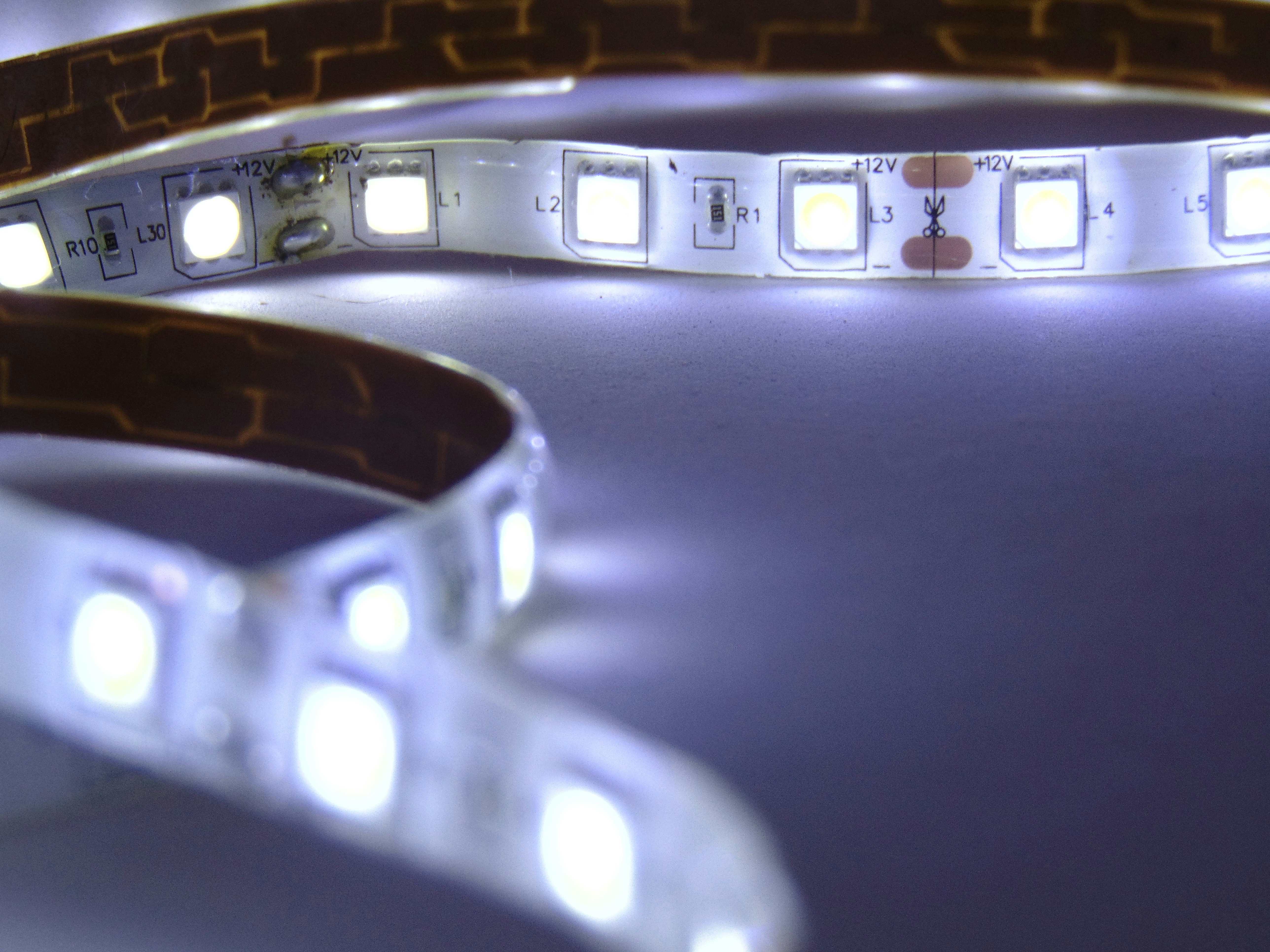
LED strip lights have become a practical lighting solution for residential, commercial, and decorative applications. Their flexibility, energy efficiency, and wide range of color options make them suitable for everything from architectural accents to retail displays. However, achieving reliable performance depends on more than selecting a strip with the desired brightness or color. Choosing the right LED strip and matching it with an appropriate power supply plays an important role in system stability and long term operation.
Understanding RGB LED Strip Lights
RGB LED strip lights are designed to produce multiple colors by combining red, green, and blue LEDs. They are commonly used in entertainment spaces, display lighting, hospitality environments, and modern home interiors. Many RGB strips can also be paired with controllers that allow users to adjust colors, brightness levels, and lighting effects.
For example, SMD5050 RGB LED strips feature 30 LEDs per meter, a 180 degree beam angle, and a lifespan of up to 50,000 hours. These strips operate on DC12V and are widely used for signage backlighting, architectural outlines, shopping malls, furniture lighting, and decorative installations. Their flexible construction allows them to bend easily and fit into a variety of lighting designs.
Another popular option is the 5050 RGBW LED strip, which combines RGB colors with warm white lighting. Operating at 24V DC with a brightness output of approximately 1200 lumens, it provides both decorative color effects and comfortable white illumination. With a viewing angle of 120 degrees and a color temperature range of 2700K to 3000K, it can support many indoor lighting projects.
Important Factors Before Buying LED Strip Lights
Before selecting an LED strip, it is important to consider the intended application. Indoor and outdoor installations often require different protection levels and performance characteristics.
Waterproof ratings are especially important for outdoor environments. IP65 and IP68 options provide protection against moisture and environmental exposure. One advantage of IP68 waterproof LED strips is that they can continue operating even when installed at depths of up to three meters without water entering the circuitry.
LED density also affects lighting quality. A higher number of LEDs per meter generally produces smoother illumination and reduces visible light spots. COB LED strips have become increasingly popular because they offer continuous lighting without noticeable dots. Compared with traditional SMD strips, COB technology creates a cleaner appearance and requires less maintenance.
For larger installations, many project managers and contractors source rgb led strip lights bulk quantities to ensure consistent specifications across multiple locations. Purchasing products with matching voltage ratings, waterproof classifications, and LED densities can simplify installation and future maintenance.
Another factor worth considering is operating voltage. While both 12V and 24V systems are common, 24V strips experience less voltage drop over longer distances. This helps maintain consistent brightness throughout the entire strip length, making them suitable for larger installations.
Why the Power Supply Matters
Even a high quality LED strip may not perform properly if it is connected to an incompatible power source. The voltage of the power supply must always match the voltage requirements of the strip. A mismatch can reduce efficiency, affect brightness, or damage the lighting system.
Calculating power requirements before installation is essential. For example, a 5050 LED strip may consume up to 17W per meter, while certain RGBW models can reach a maximum power rating of 88W. The selected power supply should provide sufficient capacity while allowing additional headroom for stable operation.
When evaluating LED Power Supply suppliers, buyers should look for products that offer stable output voltage, overload protection, short circuit protection, and thermal management features. Reliable power supplies help maintain consistent illumination while reducing the risk of system failures.
Modern RGB controllers also depend on suitable power management. A typical RGB Touch Controller supports DC12V to DC24V input, provides 18 color modes, and can control lighting from distances greater than 20 meters through RF remote technology. These features can only perform correctly when paired with an appropriate power source.
Common Installation Mistakes to Avoid
One of the most common mistakes is using a power supply with insufficient wattage. This often results in flickering, unstable brightness, or premature component failure.
Another issue is ignoring voltage requirements. Before installation, users should always verify that the power supply matches the strip’s operating voltage. Manufacturers frequently recommend checking power specifications before connecting any lighting components.
Poor cable connections can also affect performance. Loose terminals and incorrect polarity may lead to inconsistent operation or complete system failure. During installation, positive and negative terminals should always be connected correctly.
Exceeding the recommended strip length is another mistake that can contribute to voltage drop. For extensive installations, dividing the lighting into multiple powered sections often provides better results.
Tips for Long Lasting LED Lighting Systems
Selecting quality components is one of the most effective ways to improve system longevity. Many professional installations use products manufactured by experienced companies with established production capabilities and technical support resources.
Shenzhen Dekingled Co., Ltd., established in 2014, manufactures a wide range of LED lighting products including COB LED strips, RGB strips, neon lighting solutions, controllers, and power supplies. The company also offers technical support and fast delivery services for lighting projects.
For maintenance, regularly inspect wiring connections, clean exposed surfaces, and ensure proper ventilation around power supplies. COB LED strips are particularly easy to maintain because accumulated dust can typically be removed with a simple wipe.
Choosing products with suitable waterproof ratings, adequate power capacity, and compatible control systems helps create a lighting installation that delivers stable performance over time.
Conclusion
Reliable LED lighting begins with selecting the right combination of strip lights and power supplies. Factors such as voltage, power consumption, waterproof protection, LED density, and installation requirements all contribute to overall performance. By carefully matching LED strips with appropriate power supplies and following proper installation practices, users can build lighting systems that remain efficient, consistent, and dependable for years to come.
Leave a Reply