Most businesses don’t start out needing a fully automated packaging line — they start with one bottleneck, one machine, and a specific problem to solve. But packaging needs rarely stay static, and the manufacturers best equipped to grow with a business are the ones who can take a company from a single piece of equipment to a fully integrated line without forcing a complete restart every time production scales up. Understanding how that progression works helps businesses choose a packaging machine manufacturer they won’t outgrow within a year or two.
The Natural Stages of Packaging Automation
Stage One: Solving the Immediate Bottleneck
Most automation journeys begin with the most painful manual step — usually filling, sealing, or cartoning — being replaced by a single dedicated machine. At this stage, the priority is simple: solve the specific problem without overinvesting in capacity or features the business doesn’t need yet.
Stage Two: Connecting Adjacent Steps
Once the first bottleneck is solved, the next constraint usually appears just before or after it in the process. A business that automated filling often finds capping or labeling becomes the new manual chokepoint, prompting the addition of a second machine designed to work alongside the first.
Stage Three: Building an Integrated Line
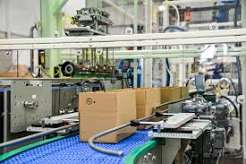
Eventually, individual machines connected with manual handoffs in between give way to a properly integrated line, where conveyors and controls coordinate multiple stages — filling, capping, labeling, cartoning, sealing — into one continuous, largely hands-off process.
A manufacturer capable of supporting all three stages, rather than only selling standalone machines, saves a growing business from re-engineering its entire packaging setup every time it adds a new piece of equipment.
Why Engineering Continuity Matters
Compatible Design From the Start
A manufacturer that designs machines with future integration in mind — consistent control systems, compatible conveyor interfaces, similar electrical specifications — makes it far easier to add equipment later without compatibility headaches. Buying machines piecemeal from unrelated suppliers often means expensive custom work just to get them talking to each other.
One Engineering Team, One Point of Accountability
When a single manufacturer designs the full line, there’s one team responsible for making sure every stage works together, rather than several vendors pointing fingers at each other when something doesn’t sync properly. This matters enormously when troubleshooting a line that isn’t performing as expected.
Standardized Training and Maintenance
Operators trained on one manufacturer’s control interface and mechanical logic can typically adapt to that manufacturer’s other machines far more easily than switching between entirely different systems from separate suppliers, which reduces training time as a line grows.
What a Turnkey-Capable Manufacturer Actually Offers
A manufacturer set up to support full production lines typically brings a few capabilities that standalone machine sellers don’t:
Line layout design. Planning how equipment fits together on an actual factory floor, accounting for space, workflow, and future expansion room.
Custom engineering across multiple machine types. The ability to adapt filling, sealing, cartoning, and wrapping equipment to work together for a specific product, rather than offering only one category of machine.
A network of specialized component partners. Access to complementary equipment and parts suppliers, allowing a full line to be assembled even when no single company builds every component in-house.
Coordinated installation and commissioning. Bringing an entire line online together, with testing across the full sequence rather than validating each machine in isolation.
Signs a Manufacturer Can Actually Support This Growth Path
Before committing to a supplier for what might become a multi-stage automation project, a few signs suggest they can genuinely support that growth:
- A track record of projects that expanded from a single machine into a larger line for the same client
- Willingness to discuss future stages during the very first purchase, rather than treating each order as isolated
- Engineering flexibility to adapt existing machines to interface with new equipment later
- Clear documentation and consistent control architecture across their product range
A manufacturer without these traits can still sell a perfectly good individual machine, but may leave a business re-engineering compatibility problems later, once the second or third piece of equipment enters the picture.
Planning Ahead Without Overbuying
None of this means a business should buy a full line before it needs one. The smarter approach is choosing a manufacturer capable of that eventual scale, while still buying only what solves today’s actual bottleneck — leaving the door open to expand later without starting the search for a new supplier from scratch.
Final Thoughts
The right packaging machine manufacturer isn’t just the one with the best single machine — it’s the one capable of growing alongside a business as its packaging needs evolve from a single bottleneck to a fully coordinated production line. Choosing a manufacturer with that longer-term engineering capability, even when only buying one machine today, is what prevents a business from having to rebuild its packaging setup from the ground up every time it scales.
Leave a Reply