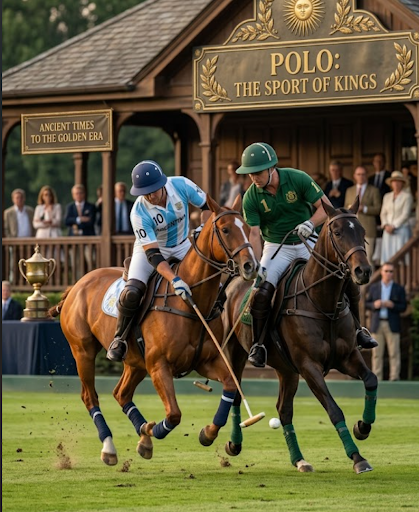
Few sports carry the weight of history and prestige quite like polo. Known worldwide as “the sport of kings,” polo has traveled across empires, continents, and centuries, evolving from a military training exercise into one of the most elegant and physically demanding equestrian disciplines on the planet. This article explores the full history of polo — from its ancient origins to the modern era, in which Argentina stands unmatched as the world’s greatest polo nation.
The Ancient Origins of Polo
Persia: The Birthplace of the Game
Most historians trace the origins of polo back to ancient Persia, around the 6th century BC, where it was originally developed as a training exercise for cavalry units. Persian nobility and military elites played the game — then known as chowgan — to sharpen horsemanship, teamwork, and battlefield reflexes. It quickly became more than training; it became a symbol of power, status, and royal leisure, which is precisely where the nickname “sport of kings” comes from.
Spread Across Asia
From Persia, polo spread eastward along trade and conquest routes:
- India and Tibet adopted the game, with regional variations in team size and rules
- China, during the Tang Dynasty, embraced polo among its aristocracy
- Japan developed its own version influenced by Chinese contact
- Central Asian tribes played rougher, more informal versions closer to the game’s cavalry roots
By the Middle Ages, polo had become deeply embedded in royal courts and military traditions throughout Asia, though it remained largely unknown in the Western world.
British Colonization and Polo’s Journey West
Discovery in India
The turning point for global polo came in the 19th century, when British officers stationed in India encountered the game being played by local cavalry regiments in Manipur. Fascinated by its speed and skill, British colonists began organizing their own matches and formalizing the rules.
Formalization of the Modern Game
In 1859, the first polo club was established, and by the 1870s the sport had been introduced in England, where it was adapted to fit Western equestrian traditions. Standardized rules, field dimensions, and match structures (including the division of play into periods known as chukkers) were developed during this period, forming the foundation of the game as it’s known today.
From England, polo spread rapidly through the British Empire and into elite social circles across Europe and the Americas.
Polo Arrives in Argentina
The Beginning of a Legacy
Polo arrived in Argentina in the late 19th century, brought over by British immigrants and estancia owners who settled in the pampas. The vast open grasslands of the Argentine countryside, combined with a strong local horse culture rooted in gaucho traditions, created the perfect environment for the sport to flourish.
The Criollo Horse Advantage
A crucial factor in Argentina’s rise to polo dominance was the Criollo horse, a hardy, agile breed descended from horses brought by Spanish colonizers. Crossed over generations with Thoroughbreds, this breeding produced the modern Argentine polo pony — widely considered the best horse in the world for the sport, prized for its speed, stamina, and responsiveness.
Argentina: The Undisputed Capital of World Polo
A Culture Built Around the Sport
By the early 20th century, Argentina had transformed polo from an imported pastime into a national institution. Wealthy landowning families invested heavily in breeding, training, and competition, and polo became woven into the identity of the Argentine countryside in much the same way football is woven into its cities.
Today, Argentina dominates the sport at every level:
- The country produces the majority of the world’s top-ranked professional players
- Argentine-bred polo ponies are exported and prized by clubs across the globe
- The Argentine Open Championship, held annually in Buenos Aires, is widely regarded as the most prestigious polo tournament in the world
- Argentina holds the highest concentration of 10-goal handicap players in polo history, the sport’s highest possible individual rating
The Role of Polo Schools in Sustaining Excellence
Argentina’s continued dominance isn’t accidental — it’s the result of a deeply rooted training infrastructure. Institutions such as the Argentina Polo School play a central role in preserving and passing down the technical knowledge, horsemanship, and playing philosophy that have made Argentine polo the global standard. These schools train riders of all levels, from beginners looking to experience the sport for the first time to aspiring professionals seeking the same foundation that produced generations of world champions.
By combining traditional gaucho horsemanship with modern coaching methods, schools like these ensure that Argentina’s polo legacy continues to be taught, refined, and exported to players and enthusiasts from around the world.
Why Argentina Remains Unbeatable in Polo
Several factors combine to explain Argentina’s sustained supremacy in the sport:
- Horse breeding excellence: unmatched access to world-class polo ponies
- Early exposure: many Argentine players begin riding and playing as children
- Cultural depth: polo is treated as a serious sporting tradition, not just a leisure activity
- Structured education: specialized polo schools provide consistent, high-level training
- Competitive ecosystem: a dense calendar of high-goal tournaments keeps players sharp year-round
Conclusion
From its origins as a Persian cavalry exercise to its transformation into a global symbol of elegance and skill, polo’s journey is a story of cultural exchange and evolution. Nowhere has that evolution reached greater heights than in Argentina, where a unique combination of horse breeding, rural tradition, and dedicated training institutions like the Argentina Polo School has cemented the country’s status as the true home of modern polo. As the sport continues to grow worldwide, Argentina remains the benchmark against which every polo nation is measured.
Leave a Reply