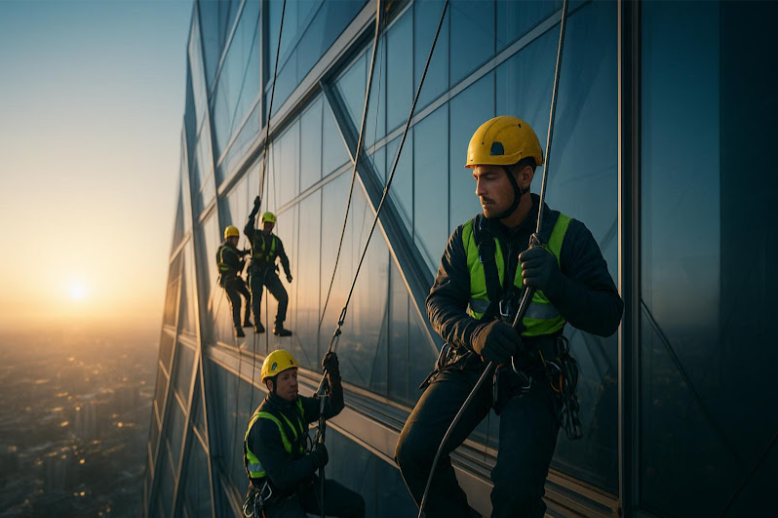
Industrial sites are getting bigger, more complex, and much taller than they used to be. That makes a simple question hard to answer: how do you fix and maintain important parts of a building or facility when they are high up, cramped, or hard to reach? Many industries now use industrial rope access to do this work. With trained technicians and special rope systems, teams can inspect, maintain, and repair places where older methods often struggle. It gives safe access and more flexibility across many types of sites.
From tall skyscrapers to offshore oil rigs to huge wind turbines, these structures need careful upkeep. Older options like scaffolding or large cranes can take a long time to set up, cost a lot, and get in the way of normal operations. That is why more industries are using rope access-a method that reaches tricky areas and brings clear benefits for safety, speed, and cost. For many companies, it is not just another option; it is the method they choose first, because it lets work carry on with less disruption, even in difficult conditions.
What Is Rope Access and Why Is It Used in Industrial Maintenance?
Industrial rope access is a way of positioning workers so they can reach high, tight, or hard-to-access areas using ropes, harnesses, and related gear. It started in the 1980s, mainly because offshore oil and gas platforms in the North Sea were difficult to maintain, especially in bad weather.
Scaffolding was slow and awkward to use in those conditions, so companies borrowed ideas from mountaineers, cavers, and rock climbers. Over time, climbing methods were combined with industrial safety rules, creating what we now call rope access.
Rope access has grown from a specialist method into a common and flexible tool. Technicians move up, down, and sideways on ropes, working while supported by their harness, sometimes with a work seat for comfort. A main safety feature is redundancy: a two-rope system with a working line and a separate safety line, each with its own anchor point. This means that even if one system fails, the other is there as backup.
Along with strict training and certification from groups like IRATA (Industrial Rope Access Trade Association) and SPRAT (Society of Professional Rope Access Technicians), this makes rope access one of the safest ways to work at height, with a stronger safety record than many traditional access methods.
Key Benefits of Rope Access for Maintenance and Repairs
Rope access is widely used because it solves common problems in industrial maintenance:
One of the biggest advantages is better safety. Rope access follows strict safety standards and uses two-rope systems, certified equipment, and well-trained technicians. Workers complete detailed training, including rescue skills, so they can handle difficult situations safely. Recorded accident rates for rope access are often lower than those seen with older access methods, making it a very safe choice for working at height.
Speed and efficiency are also major benefits. Scaffolding and heavy machinery can take days or weeks to set up and remove. Rope access can often be set up and packed away in hours, or even minutes for smaller jobs. That means teams can start sooner and finish faster, which helps when a site cannot afford long shutdowns.
Rope access also brings strong cost savings. Without large scaffolds, expensive equipment hire, or heavy lifting machines, total project costs can drop a lot. Small teams with mixed trade skills can handle many tasks in one visit, which keeps work simple and reduces spending. This approach can lower costs without lowering safety or quality.
Another key benefit is easy access to difficult areas. Many structures have places that are hard to reach, such as tall towers, offshore platforms, bridges, complex pipework, and confined spaces. Rope access lets technicians reach these spots without major access builds. Because workers can position themselves close to the structure, they can do detailed and accurate work.
Rope access also has a smaller environmental impact. It uses less equipment than methods that rely on big machines and large temporary structures. That often means fewer materials, less transport, and less disturbance to the site around it. Finally, it is flexible and multi-use: the same rope access setup can support inspections, corrosion work, welding, coating repairs, electrical tasks, and cleaning across many industries.
Which Industries Rely on Rope Access for Maintenance and Repairs?
Because rope access is flexible and fast, it is used across many industries. From tall buildings to remote sites, rope access technicians help keep assets safe and working as they should.
Oil and Gas Refining and Petrochemical Plants
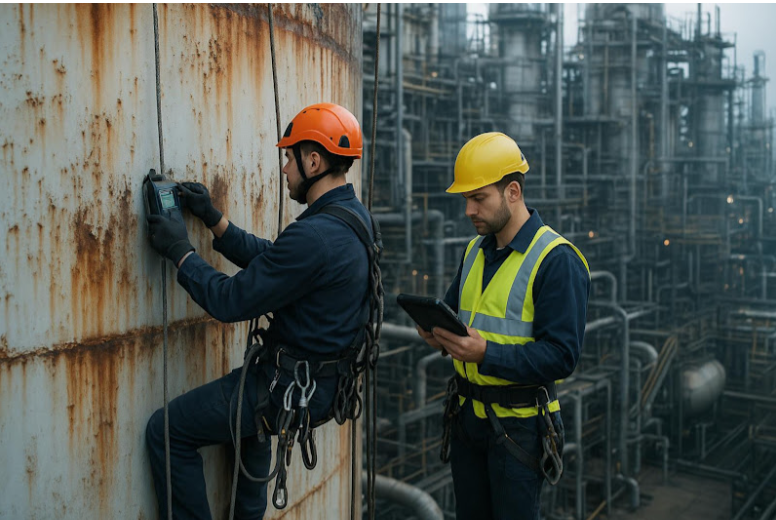
Oil and gas was one of the first industries to use rope access, and it is still widely used today, especially on offshore platforms, drilling rigs, and refineries. These sites include flare stacks, pipelines, storage tanks, and dense pipe networks that can be difficult to reach. Offshore, it can be unrealistic to depend on cranes or scaffolding for routine work.
Rope access teams support inspections, maintenance, and repairs inside and outside these facilities. Common tasks include welding, painting, corrosion treatment, insulation fitting and repairs, and structural checks, helping protect safety and keep high-value assets running.
Wind Energy and Renewable Power Facilities
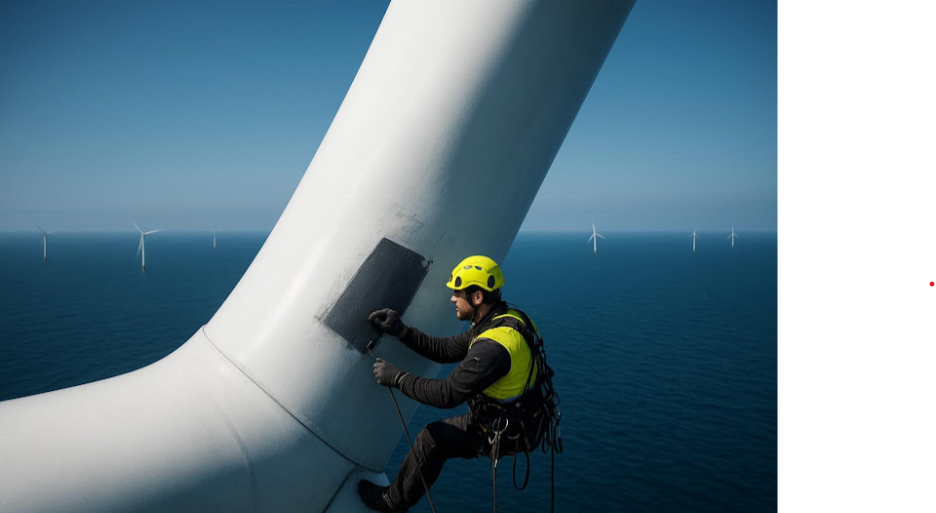
As renewable energy grows, the need for practical maintenance on wind turbines and related sites grows too. Rope access is widely used because it is a cost-friendly and efficient way to inspect and maintain these tall structures. Technicians can check and repair turbine blades (including near the tips), work on the tower, and support equipment installs without relying on large cranes or complicated lifting plans. This helps keep key parts working well and extends their service life.
Building Maintenance, Cleaning, and Restoration
Modern buildings are taller and often have complex shapes that make traditional maintenance difficult. Rope access gives direct access for façade checks, window cleaning, and restoration. It is often used on high-rise buildings, façades, and roofs to clean, repair, maintain, paint, and seal exterior features.
Because the setup is small, it works well in busy city locations or places with little ground space, and it reduces disruption for the public and nearby businesses.
Bridges, Dams, and Infrastructure Projects
Bridges, dams, and viaducts need regular checks and repairs to stay safe. Rope access is used to reach hard spots, carry out detailed inspections, and complete repairs without major closures or large expensive equipment.
Well-known structures around the world, including the Hoover Dam, have used rope access teams for accurate work and regular monitoring.
Telecommunications and Broadcast Towers
Many telecom towers and transmission structures are placed in remote or awkward locations, which makes access difficult and costly without specialist methods. Rope access technicians, often with extra skills like cabling and electrical work, climb and work on these towers to complete installs, inspections, and repairs. This keeps communication networks running with less downtime.
Power Generation and Transmission
Power generation sites-such as nuclear facilities, thermal power stations, and transmission assets-often use rope access for inspection, repairs, and maintenance. Rope access allows teams to work around complex equipment with less downtime. It can also lower the risk of ignition compared with some traditional equipment, which matters in settings where fire risk is a major concern.
Maritime and Ship Maintenance
At sea, and even while docked, it can be difficult or impossible to set up cranes or scaffolding for ship work. Rope access gives crews a practical way to complete internal and external tasks on vessels. This can include welding, painting, sealing against weather, and corrosion treatment on hulls, superstructures, and onboard cranes. Rope access is also used on port and harbor structures like quay walls and docking areas, helping cut downtime and costs in shipping.
Mining and Heavy Industry
Mining and heavy industry often involve tight spaces, big heights, and unstable ground. Rope access technicians can reach areas inside mine shafts, inspect high ceilings, access beams and supports, and apply sealants to wall cracks. Rope access teams are also important for rock stabilization near quarries, mines, cliffs, roads, and rail lines. They work in hard-to-reach places to reduce loose debris caused by natural or man-made movement, helping keep nearby infrastructure safe.
Entertainment, Stadiums, and Events Venues
Events and entertainment often use large temporary builds and high rigging points. Rope access technicians support work like fitting lights, cameras, special effects, decorations, and banners on stages and large venue structures. Using rope access for rigging and installs can be quicker and cheaper than bringing in large access equipment, especially for short event timelines.
Common Maintenance and Repair Tasks Performed via Rope Access
Rope access is used for many kinds of work, often faster and with less disruption than traditional methods. Teams are often multi-skilled, meaning technicians hold rope access certification as well as trade skills, so one crew can cover a wide range of tasks.
Inspection and Non-Destructive Testing (NDT)
Inspection and non-destructive testing (NDT) are some of the most common uses of rope access. High-rise buildings, bridges, wind turbines, offshore platforms, and other large structures need regular checks to meet safety rules and stay in good condition.
Rope access lets teams reach the asset quickly and finish inspections in hours, compared to the long time needed to build and remove scaffolding. Technicians can carry out standard NDT methods, including Eddy Current (EC), Liquid Penetrant (PT), Magnetic Particle (MT), Radiography (RT), Ultrasonic (UT), and Visual (VT).
They can also perform advanced techniques such as Acoustic Emission (AE), Automated Ultrasonic (AUT), Digital Radiography (DR), Guided Wave (GWT), Phased Array (PA), and Pulsed Eddy Current (PEC), along with API 510, API 570, and API 653 inspections. This range of inspection options helps owners track asset condition and fix small issues before they turn into expensive failures.
Welding, Painting, and Corrosion Control
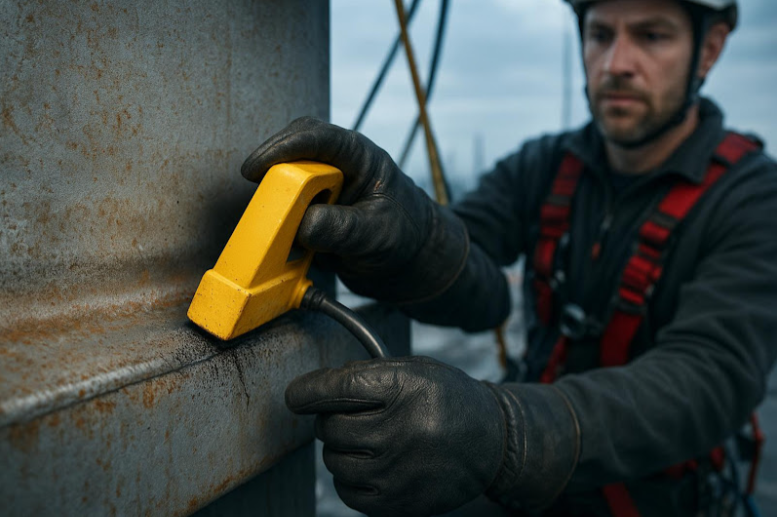
Keeping industrial assets strong and protected often involves welding, painting, and corrosion work. Rope access makes it easier to do this work on vertical surfaces and high areas. Teams from Rope Access in London can complete welding and structural repairs, remove corrosion, prepare surfaces (including sandblasting and pressure washing), and apply protective coatings and paint.
This is especially important for assets exposed to harsh conditions, such as offshore rigs and chemical towers, where rust prevention and weather protection directly affect safety and service life.
Mechanical Repairs and Asset Upkeep
Rope access maintenance technicians can do many of the same mechanical jobs as ground crews, but in places that are high up or confined. This can include fitting and repairing insulation on pipes and vessels, installing and maintaining lighting, and completing routine upkeep tasks.
For wind turbines, this can include blade shroud replacement, bolt torque and tension work (including replacement and extraction), bus bar repair and replacement, cable slack repair, deck and yaw lip seal replacement, ladder repairs, and cleaning and composite repairs on nacelles and nose cones. A small, mobile team doing multiple tasks can reduce disruption and keep important systems online.
Cleaning Windows, Façades, and Industrial Equipment
Cleaning at height is a regular need, from office towers to industrial stacks. Rope access is widely used for window cleaning, façade cleaning, and restoration on high-rise buildings, offering an effective way to clean, repair, and reseal exterior surfaces.
In industrial settings, rope access teams also carry out cleaning jobs like pressure washing and de-slagging equipment, helping plants run efficiently and meet hygiene or safety rules.
Rockfall Mitigation and Slope Stabilization
In places where ground and rock can shift-such as quarries, mines, cliffs, and transport routes near roads and railways-rope access teams help reduce rockfall risk and stabilize slopes. These teams work in areas that machines cannot easily reach.
Services can include rock face stability checks, clearing vegetation, drilling for blasting, designing and installing dynamic barriers, fitting rock anchors, scaling loose material, and installing or removing wire mesh. By reducing hazards from falling rocks, erosion, and landslides, rope access supports safer construction, operation, and maintenance for nearby infrastructure.
As industrial structures get taller, more complex, and more remote, demand for skilled rope access technicians will keep growing. By 2026, rope access has become a major part of modern maintenance, giving a flexible option that avoids the high cost, long setup times, and heavy disruption linked to older access systems.
For companies that want to maintain complex assets safely and efficiently, rope access services offer a practical and cost-effective solution. Strong training and certification standards from IRATA and SPRAT also help keep work quality and safety high. With that focus on safe methods and skilled technicians, rope access is likely to stay an important way to protect asset life, safety, and uptime across many industries for years ahead.
Leave a Reply