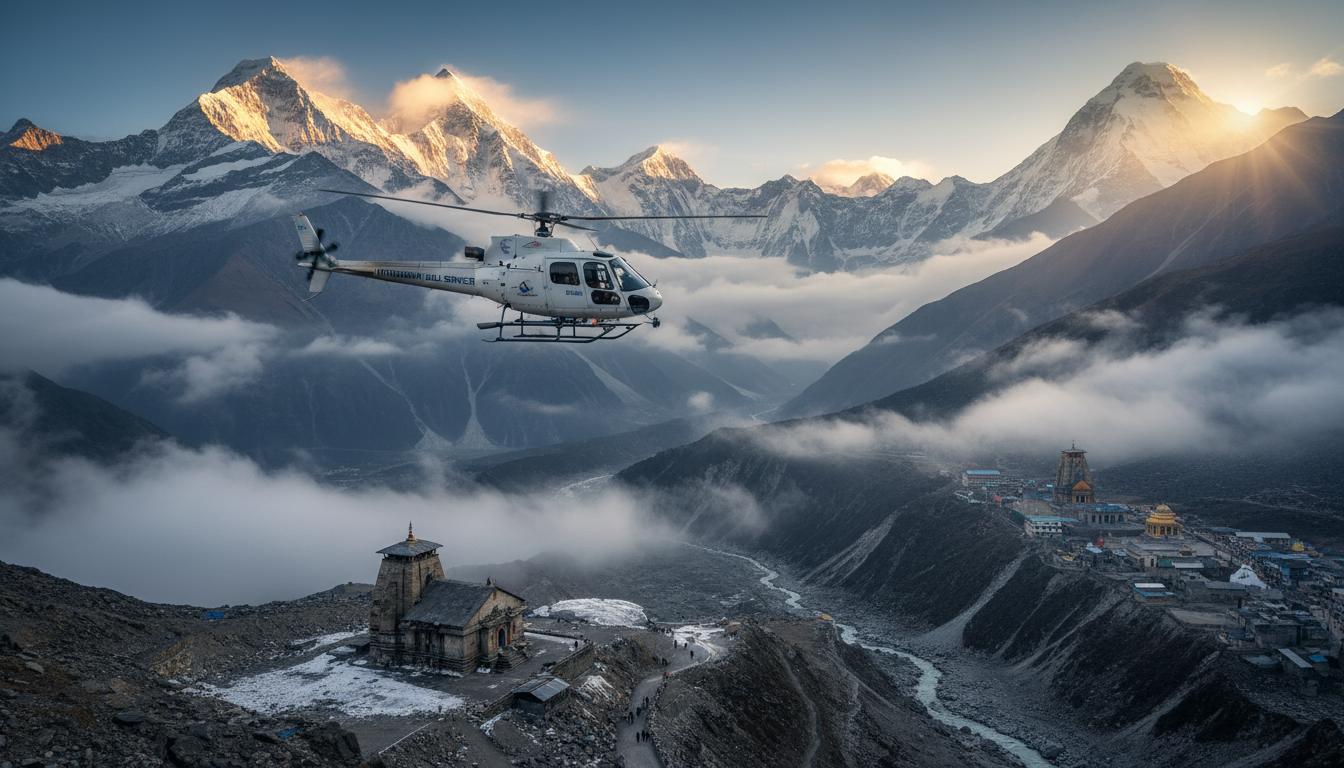
The Chardham yatra by helicopter represents the pinnacle of spiritual travel for pilgrims seeking a seamless journey to the four sacred abodes of Uttarakhand: Yamunotri, Gangotri, Kedarnath, and Badrinath. This aerial pilgrimage bypasses the grueling physical demands of high-altitude trekking and long mountain road commutes, offering a time-efficient alternative for seniors and those with physical limitations. By choosing to complete the Chardham yatra by helicopter, travelers can transform a traditional fifteen-day trek into a focused five-day spiritual retreat. The efficiency of flight allows devotees to spend more time in prayer and meditation at each shrine, ensuring that the physical exhaustion of travel does not overshadow the profound religious significance of the experience.
The Significance of the Four Shrines in Hindu Mythology
The circuit known as Chardham is not merely a travel itinerary but a path toward spiritual liberation, or Moksha. Each site holds a distinct place in the Vedic tradition. Yamunotri, dedicated to Goddess Yamuna, marks the starting point, symbolizing the purification of the soul. Following this, pilgrims visit Gangotri, the seat of Goddess Ganga, where the river descended from the heavens into the locks of Lord Shiva.
The third stop, Kedarnath, is one of the twelve Jyotirlingas and the highest of the shrines, dedicated to Lord Shiva. The final destination is Badrinath, the abode of Lord Vishnu. Visiting these four sites in a clockwise direction is believed to wash away a lifetime of sins. Aerial transport makes this ancient tradition accessible to a modern audience, bridging the gap between rigorous asceticism and contemporary logistical ease.
Operational Logistics and the Flight Path
Operating out of Dehradun, specifically the Sahastradhara Helipad, the aerial circuit follows a strict logistical schedule dictated by mountain weather patterns. Flights typically begin in the early morning when the air is most stable. The transition between Dehradun and the various Himalayan valleys involves navigating through narrow gorges and over high ridges.
Safety is the primary concern for all operators. Modern twin-engine and single-engine helicopters are used, specifically designed for high-altitude performance. Pilots with thousands of hours of experience in mountain terrain manage the fleet. Weight restrictions are strictly enforced to maintain flight stability at altitudes exceeding 10,000 feet, requiring passengers to adhere to luggage limits of approximately 5 kg per person.
Yamunotri: The First Step of the Sacred Journey
The journey commences with a flight to Kharsali, the nearest landing point to Yamunotri. Unlike the six-kilometer trek required from Janki Chatti for ground travelers, helicopter passengers arrive within a short distance of the village. From Kharsali, the trek to the temple is brief and can be assisted by Palkis or ponies.
The Yamunotri temple, situated at an altitude of 3,293 meters, sits near the thermal springs of Surya Kund. Here, pilgrims cook rice and potatoes in the boiling water as “Prasad.” The aerial arrival ensures that devotees reach the temple during the auspicious morning hours, avoiding the midday heat and the rush of the larger crowds that arrive via the mountain roads.
Gangotri: Aerial Views of the Bhagirathi River
From Kharsali, the flight moves toward Harsil, often called the “Mini Switzerland of India.” Harsil serves as the gateway to Gangotri. The transition from the Yamuna valley to the Bhagirathi valley showcases the dramatic change in terrain, with dense cedar forests giving way to starker granite peaks.
A short drive from the Harsil helipad brings pilgrims to the Gangotri temple. This shrine, built of white granite, stands against the backdrop of the Sudarshan peak. The spiritual energy of the Ganges at its source is palpable. Because the helicopter schedule allows for a night stay in Harsil, pilgrims can participate in the evening Aarti, an experience often missed by those on rushed ground tours.
Kedarnath: Reaching the High Altitude Seat of Shiva
Kedarnath is perhaps the most challenging destination for ground travelers due to the steep 18-kilometer trek from Gaurikund. For those on an aerial pilgrimage, the flight from Phata, Sirsi, or Guptkashi directly to the Kedarnath helipad is a transformative experience. The temple, built over a thousand years ago with massive stone slabs, survived the 2013 floods, adding to its aura of divine protection.
Landing at the Kedarnath helipad, located just 500 meters from the temple, allows for immediate Darshan. The thin air at 3,583 meters requires travelers to move slowly, but the lack of physical exertion from trekking makes it manageable. The site is surrounded by snow-capped peaks, and the view of the Mandakini river winding through the valley below is a testament to the grandeur of the Garhwal Himalayas.
Badrinath: The Final Abode of Lord Vishnu
The final leg of the journey leads to Badrinath. The flight path crosses the confluence of several rivers, known as Prayags, providing a unique perspective on the geography of Uttarakhand. The Badrinath helipad is conveniently located near the temple, which sits between the Nar and Narayana mountain ranges.
Badrinath is unique because it is easily accessible by road compared to Kedarnath, but the helicopter saves nearly twelve hours of driving from the previous shrines. This allows pilgrims to visit the Tapt Kund (hot springs) and the Neelkanth peak comfortably. The temple’s bright, colorful facade stands in contrast to the rugged mountains, marking a joyous conclusion to the spiritual circuit.
Essential Preparation for High Altitude Travel
Traveling by air does not exempt one from the effects of altitude. While the physical strain is reduced, the body must still adjust to the lower oxygen levels at Kedarnath and Badrinath. It is recommended that pilgrims stay hydrated and carry basic medications for motion sickness or altitude sensitivity.
Packing must be strategic. Due to the strict 5 kg weight limit, focus on layered clothing. The weather in the Himalayas is unpredictable; temperatures can drop from 20 degrees Celsius in the sun to near freezing after sunset. Heavy woolens, a light rain jacket, and sturdy walking shoes are the three pillars of a pilgrim’s wardrobe. Carrying a small power bank and a basic medical kit is also advised, as remote areas may have limited access to specific supplies.
Best Time for the Aerial Pilgrimage
The window for the pilgrimage is narrow, dictated by the opening and closing dates of the shrines, which usually fall between late April and early November. The peak months are May and June, followed by September and October. During these periods, the skies are generally clear, providing the visibility required for safe flight operations.
Monsoon season, spanning July and August, is generally avoided for aerial travel due to heavy fog and the risk of landslides affecting helipad access. Planning the trip for the post-monsoon period offers the clearest views of the peaks and a crispness in the air that enhances the spiritual atmosphere. Booking in advance is critical, as seats on these flights are in high demand and limited by the number of daily sorties allowed by the Civil Aviation Authority.
Accommodation and Hospitality in the Mountains
While the journey is fast, the quality of rest is vital. Most aerial packages include stays in the best available hotels or cottages in Harsil, Guptkashi, and Badrinath. These accommodations focus on comfort and warmth, providing vegetarian meals that adhere to the religious requirements of the yatra.
Harsil offers cozy wooden cottages amidst apple orchards, while Badrinath has various guest houses with views of the temple. The hospitality in these regions is deeply rooted in the local culture, where guests are treated with immense respect. These quiet evenings in the mountains allow pilgrims to reflect on their journey away from the noise of the plains.
Navigating VIP Darshan and Temple Protocols
One of the significant advantages of organized aerial tours is the facilitation of VIP Darshan slips. At crowded sites like Kedarnath and Badrinath, queues can last for several hours. Most helicopter service providers coordinate with temple committees to ensure that their passengers can complete their prayers efficiently.
Understanding temple etiquette is also important. Photography is generally prohibited inside the sanctum sanctorum. Pilgrims are expected to dress modestly and follow the instructions of the local priests (Pandas). Engaging with the history and local legends shared by these priests can add layers of meaning to the visit, making it more than just a sightseeing trip.
The Future of Spiritual Tourism in Uttarakhand
The government of Uttarakhand has been investing heavily in infrastructure to support the growing number of devotees. Improved helipads, better weather monitoring systems, and enhanced safety protocols have made the aerial route more reliable than ever before. This modernization is balanced with a commitment to preserving the ecological sanctity of the “Devbhoomi” or Land of the Gods.
Sustainable tourism initiatives are being introduced to ensure that the influx of visitors does not damage the fragile Himalayan ecosystem. Pilgrims are encouraged to minimize plastic use and respect the local traditions. By choosing a regulated aerial path, travelers contribute to a system that manages human traffic in sensitive zones more effectively than unregulated ground movement.
Conclusion and Summary of the Experience
The decision to undertake this journey is a life-changing event for many. It is an investment in spiritual peace and a way to honor one’s faith without the barriers of physical hardship. The bird’s-eye view of the Himalayan peaks and the ease of moving between sacred valleys create memories that last a lifetime. Whether you are fulfilling a promise to your elders or seeking a personal spiritual awakening, the efficiency of flight ensures the focus remains on the divine. For those with less time who still wish to seek blessings, some operators offer a shorter Do dham by helicopter service focusing on Kedarnath and Badrinath, providing a condensed yet equally powerful spiritual experience in the heart of the mountains.
Leave a Reply